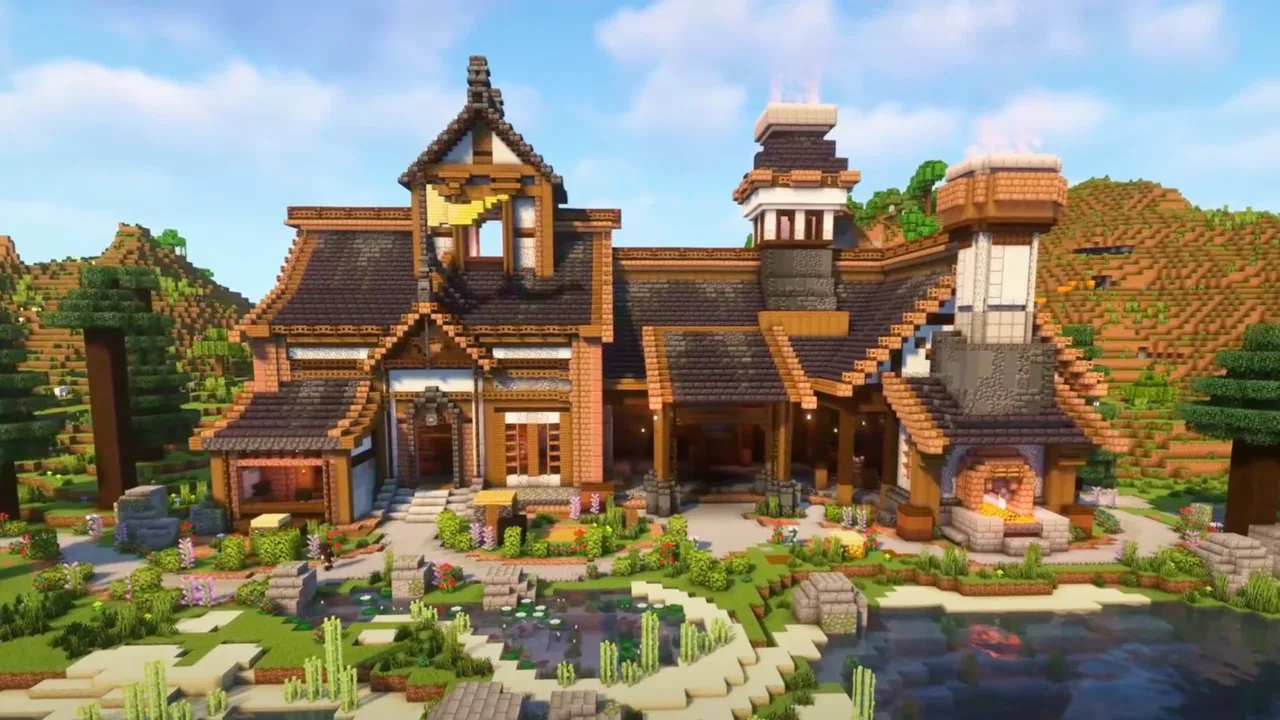
Block City: Pixel Craft 3D
- 5.0
- Rating
- 100.00K
- Installs
- Free
- Price
 Analysis by App-foxy
I spent time with Block City: Pixel Craft 3D as a compact building game and found its appeal easy to understand: it puts the focus on making places rather than following a complicated role-playing campaign. You can dig into a blocky world, collect materials, and turn an empty area into something that feels personal. That simple loop makes it especially interesting on a shared household device, where different people can take turns creating their own ideas.
This is a free role-playing game from developer 020250797, aimed at Everyone. Its store presence shows a 5.0 average from around a hundred ratings, with more than a hundred thousand installs. Those figures suggest that the game has found an audience, although I would still treat the rating as an early signal rather than a complete picture of long-term performance.
How Block City fits into a shared device
The best everyday use case is a short creative session after school, during a quiet break, or while one person is waiting for someone else. One player can work on a small house, another can reshape the nearby landscape, and a third can simply explore and decide what to build next. Because the central idea is visual and hands-on, it is easy for someone watching to understand what is happening without needing a long explanation.
You May Also Like

 Pandora - Music & Podcasts
Pandora’s Music Is Easy to Start, but Harder to Recover
Pandora’s strength is its low-effort path from a seed to a station. Its weak spot is how much confidence it asks you to place in connection, setup, and quiet recovery.

 8 Ball Pool
 Is Built on Rivalries, Rematches, and Routine
A close look at the rivalries, rematches, shared routines, and unanswered safety questions that turn a quick pool match into a persistent mobile community.

 Samsung Music
’s Quiet Strength Is Playing What You Already Own
Its reach comes less from spectacle than from dependable access to a personal library. That simplicity is both the app’s strongest retention engine and its ceiling.

 AccuWeather: Weather Radar
AccuWeather Review: A Quick, Clear Forecast for Everyday Decisions
For everyday plans, the best forecast is the one you can understand quickly. AccuWeather makes rain timing, radar, and local conditions easy to act on, with a few trade-offs.

 Hill Climb Racing
Why Hill Climb Racing Still Turns Crashes Into One More Run
A tiny car, a bumpy hill and one more upgrade: Hill Climb Racing keeps resurfacing because its simple chaos makes every near-miss feel personal.

 AliExpress - Shopping App
AliExpress Makes Global Shopping Feel Personal, but Shoppers Bear the Risk
AliExpress turns a global marketplace into a pocket-sized discovery engine. Its reach is useful, its shopping loop compelling, and its trade-offs easy to miss.
More From Our News Desk
View All News


I like this kind of game for shared use because the goal is flexible. A player who enjoys collecting can spend time mining, while someone more interested in design can concentrate on arranging blocks and planning a city. That difference matters in a household: people do not have to enjoy exactly the same part of the game to find a reason to play.
There is also a useful natural stopping point. Instead of needing to finish a long mission before handing over the device, a player can pause after completing a small room, clearing an area, or deciding on the next building. I found that makes it easier to share time fairly. The game still benefits from longer sessions when you want to develop a larger city, but it does not demand that every play period become a major commitment.
My practical advice is to agree on the purpose of a session before starting. If one person is building a neighborhood, another person randomly removing blocks can undo the plan quickly. A simple “builder,” “explorer,” or “materials” role keeps the experience calmer, especially when several people are using the same device. This is not a built-in management system; it is a household habit that helps the open-ended design work better.
What the building loop feels like in practice
The appeal comes from the relationship between gathering and creating. Mining gives exploration a reason, while crafting turns collected resources into visible progress. Building then gives the player a reason to return to the same area instead of treating the world as a place to pass through once. I found the loop more satisfying when I set a small goal, such as laying out streets or making a compact home, rather than wandering without a plan.
The three-dimensional presentation helps with that planning. A structure looks different from ground level than it does from above, so I learned to step back before adding too many details. That small pause prevents a common problem in block-building games: making a construction that is technically large but difficult to read. Starting with a simple outline and leaving room around it works better than filling every space immediately.
Another useful approach is to separate functional work from decoration. First, I gathered what I needed and established the shape of a building. Only after that did I spend time on visual touches. This reduces the frustration of using limited materials on details before the main structure is stable. For younger players, it also creates a clear sequence: explore, collect, build, then improve.
The game is at its strongest when I treat it as a creative sandbox with role-playing elements, not as a story-heavy adventure. Anyone expecting elaborate characters, deep dialogue, or a carefully directed plot may find the experience too open. Its satisfaction comes from deciding what the world should become, and that requires the player to supply much of the direction.
Setting boundaries before handing over the device
Shared-device play raises a question that is easy to overlook: whose progress is being changed? Before several people use the game, I would decide whether the device is for one shared city or for separate turns with a clear handoff. If everyone builds in one place, the result can become a genuinely collaborative project. If people have different ideas about what the city should look like, separate sessions with agreed boundaries may avoid arguments.
I would also establish a rule about changing another person’s work. In an open building environment, the ability to mine and reshape the surroundings can be creative, but it can also make accidental damage feel personal. A household agreement not to alter a finished building without permission is more useful than assuming everyone will naturally play the same way.
For a younger player using an adult’s phone or tablet, I recommend a short first session together. Watch how the controls feel, check whether the device is comfortable to hold, and make sure the player understands that starting over or changing the landscape can affect the shared project. This is a better introduction than simply handing over the device and expecting the game to explain every social rule.
The game is free, which makes trying it less complicated for a household budget. Even so, free does not automatically mean frictionless. A shared device still needs enough storage, battery, and physical space for comfortable play, and those practical concerns can matter more than the price. I would test it on the actual device that children or family members will use rather than assuming that a game suitable for one phone will feel equally good on another.
The listed minimum operating system is Android 7.0, and the current version is 2002. That makes the compatibility information useful when deciding whether an older Android device is worth dedicating to casual play. Compatibility alone does not tell me how smoothly every device will run it, so I would judge the experience by trying movement, mining, and building for a few minutes before making it the household’s regular game.
Coordinating a city without turning play into a chore
Collaboration works best when the city has visible zones. One person can plan homes, another can work on public spaces, and someone else can explore for materials. Even without formal team tools, dividing the map mentally gives each player ownership. I found that this also makes progress easier to notice: a road, a cluster of buildings, or a marked area provides a shared sense of direction.
A small planning conversation can prevent a lot of rebuilding. Before placing blocks, decide where the main center will be and which areas should remain open. This is especially helpful for children who want to build immediately. Letting them make the first structure is more enjoyable than forcing a detailed plan, but a loose boundary keeps later projects from becoming cramped.
For a family sharing one device, I would use a simple handoff routine. The outgoing player can explain what they changed, point out anything unfinished, and say what should not be touched. The next player then has context instead of assuming the world is abandoned. This turns a solo sandbox into a cooperative story, even when only one person is holding the device at a time.
There is a trade-off here. A shared city can teach patience and coordination, but it can also make creative freedom feel limited. A player who wants to experiment may hesitate if every block has to match someone else’s design. In that situation, a separate personal area is the better compromise. It preserves the common project while giving each person a place where unusual ideas are welcome.
I would not recommend using the game as a substitute for a structured multiplayer experience if the household specifically wants persistent online teamwork, clear player roles, or advanced social tools. The attraction here is the accessible building concept, not a promise of organized group management. For many homes, that simplicity is a strength; for others, it will feel like a missing layer.
Age context, trust, and realistic expectations
The Everyone content rating makes the game approachable for a broad age range, and the creative premise is easy to explain to a child. Still, an age label is not a replacement for supervision or shared rules. Younger players may need help understanding resource use, deciding what to build first, and dealing with the disappointment of a changed structure. Older children may prefer more independence but still benefit from clear boundaries on shared work.
I would pay attention to how a child responds to open-ended play. Some children enjoy having no single correct answer, while others become frustrated when the game does not provide a clear next mission. For the first group, Block City can become a relaxing creative outlet. For the second, a more guided role-playing game may be a better choice, at least until they are comfortable setting their own goals.
Trust is particularly important when several people use one world. The game’s creative freedom is enjoyable only when players believe their work will be respected. I would avoid promising a child that a building is permanently safe unless the household has established how the device and world will be shared. That honest conversation prevents the game from becoming a source of conflict.
There is a useful learning angle, although I would keep it informal. Planning a neighborhood introduces ideas about space, sequence, and trade-offs: a large building needs room, materials take time to gather, and decoration is easier after the basic shape is complete. I would not present the game as an educational tool in a formal sense, but those habits can emerge naturally when a player is motivated by a project they chose.
Adults may enjoy the game too, particularly if they like low-pressure construction and want something that can be understood quickly. However, players who prefer demanding combat systems, complex character progression, or a strong narrative may run out of reasons to continue. The role-playing label should not be read as a guarantee of the depth found in larger genre alternatives.
Where it stands beside familiar alternatives
Compared with a tightly scripted role-playing game, this one gives me more control over the setting and less direction from the game itself. That makes it easier to share with different ages because people can choose their own level of involvement. The downside is that motivation depends heavily on personal projects. If I do not decide what I want to create, the session can feel aimless.
Compared with a more feature-heavy block-building alternative, the straightforward premise may be less intimidating. A new player can understand the basic relationship between mining, crafting, and construction without first learning a large set of systems. The trade-off is that experienced sandbox players may want more depth, more variety, or stronger long-term structure than this compact experience provides.
Compared with a conventional city-building game, the direct three-dimensional interaction is the main difference. I am not only placing plans from a distant management view; I am shaping the environment through a character’s immediate actions. That feels more personal, but it can also be slower when the goal is to manage a large settlement rather than build one structure at a time.
For a household, I would choose this game over a complex alternative when the priority is easy creative access and flexible turn-taking. I would choose something else when the priority is deep progression, formal cooperation, or a rich narrative that keeps everyone moving toward the same objective. The right choice depends less on age alone than on whether the players enjoy inventing their own goals.
Small habits that make the experience better
My first recommendation is to begin with a project that can be completed in one sitting. A small house, a short street, or a simple central square gives the player a visible result and teaches the basic rhythm without overwhelming them. Large ambitions are exciting, but an unfinished city can make a new player think the game is harder than it really is.
Second, leave deliberate empty spaces. It is tempting to use every available block as soon as materials are collected, yet open ground makes future expansion possible and gives the city a clearer shape. I found that a little restraint improved later decisions more than constant decoration did.
Third, use landmarks to coordinate shared play. A distinctive building or central area gives everyone an easy reference point when handing over the device. Instead of saying “the place near where I was working,” a player can identify the street, square, or structure that needs attention. This is a small workflow improvement, but it matters when several people are learning the world at different speeds.
Finally, treat exploration as preparation for building rather than a separate activity. When I went out with a specific construction in mind, mining felt purposeful. When I explored without any intended use for what I collected, the session was less memorable. A short materials list, even one made mentally, can turn wandering into progress.
My household verdict
Block City: Pixel Craft 3D is a good fit for households that want a free, approachable building game that can be enjoyed in short turns or expanded into a longer creative project. I appreciate that its central idea is immediately understandable, while still leaving room for planning, experimentation, and cooperation. The Everyone rating also makes it easier to consider for mixed-age use, provided the adults set sensible expectations around shared progress.
I would skip it for players who need a strong story, demanding role-playing mechanics, or clearly defined multiplayer coordination. I would also be cautious with a shared city if the players are likely to overwrite one another’s work. In that case, agreeing on zones and handoff rules is essential, because the open-ended design offers freedom but does not replace household organization.
For me, the deciding strength is the balance between personal creativity and casual shared use. A child can build a first home, an older player can plan a wider city, and an adult can join without needing a long tutorial about the premise. It is not trying to be every kind of role-playing game, and that narrow focus is exactly why it can work well on a family device.
After trying its building-centered approach, I see it as a relaxed choice for people who enjoy making visible progress at their own pace. Start small, protect each person’s work, and use shared landmarks to keep the city understandable. With those habits, the game becomes more than a quick block-placing distraction: it becomes a simple shared space where each player can leave a recognizable mark.
FAQs for Block City: Pixel Craft 3D
01What is Block City: Pixel Craft 3D?
Block City: Pixel Craft 3D is an open-world sandbox game that allows players to create, explore, and survive in a block-based environment. It combines elements of crafting, building, and adventure, offering a wide range of activities, such as constructing buildings, engaging in combat, and completing various quests.
02Is Block City: Pixel Craft 3D free to play?
Yes, Block City: Pixel Craft 3D is free to download and play. However, it includes in-app purchases that allow players to unlock additional features, skins, and resources. These purchases are optional and can enhance the gaming experience, but they are not necessary to enjoy the core gameplay.
03What platforms is Block City: Pixel Craft 3D available on?
Block City: Pixel Craft 3D is available on both Android and iOS platforms. You can download it from the Google Play Store for Android devices and the Apple App Store for iOS devices. Ensure your device meets the minimum system requirements for optimal performance.
04Does Block City: Pixel Craft 3D have multiplayer features?
Yes, Block City: Pixel Craft 3D offers multiplayer features, allowing players to connect and interact with friends or other players worldwide. You can join cooperative missions, explore cities together, or engage in player-vs-player battles, adding a social and competitive element to the game.
05How often does Block City: Pixel Craft 3D receive updates?
The developers of Block City: Pixel Craft 3D regularly release updates to improve gameplay, fix bugs, and introduce new content. These updates ensure that the game remains fresh and engaging, often adding new features, challenges, and events for players to enjoy. Check the app’s page for the latest update information.
Pros
- Engaging 3D pixel graphics
- Wide range of customization options
- Multiplayer mode enhances fun
- Regular updates with new content
- Simple controls for easy play
Cons
- In-app purchases can be pricey
- Occasional lag in multiplayer mode
- Ads can be intrusive at times
- Limited storyline depth
- Requires constant internet connection

Block City: Pixel Craft 3D
Gallery